
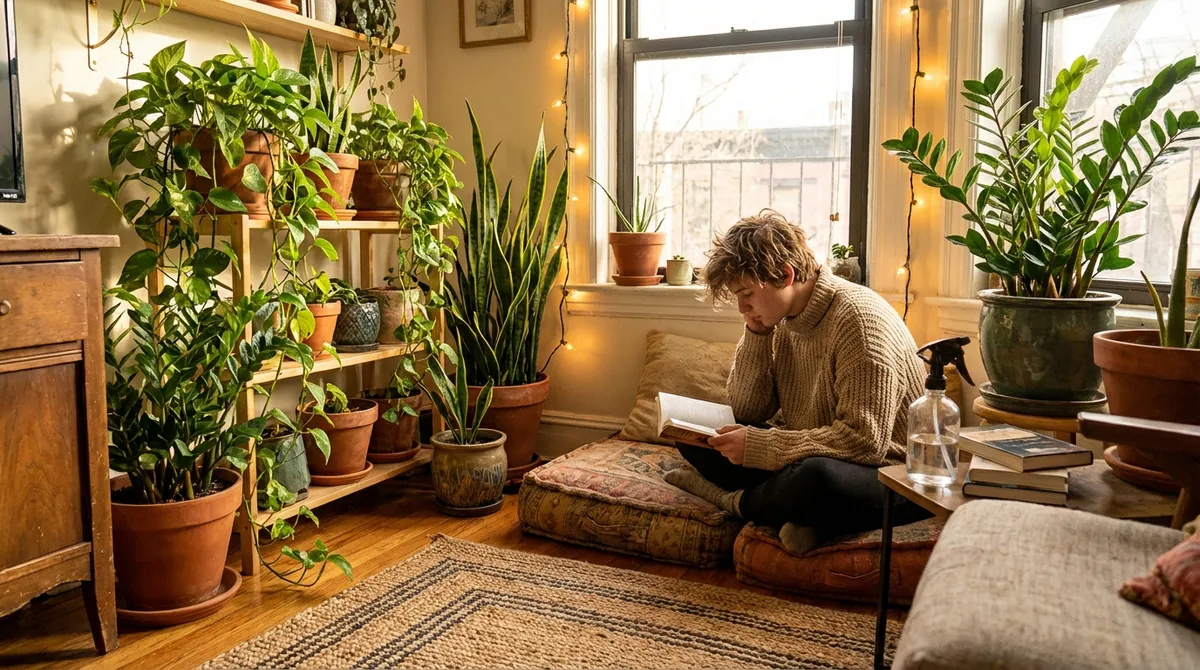
Turning your home into a cozy jungle doesn’t have to be complicated or expensive. With a few easy-care plants, simple routines, and seasonal tweaks, you can enjoy greenery year-round—even if you’ve “killed every plant ever.” This guide walks you through beginner-friendly indoor plants, how to care for them, and what to do as the seasons change so your plants (and you) stay stress-free.
Choosing the Right Indoor Plants for Your Space
Before buying plants, think about your space the way a plant would: How much light is there? How warm or drafty is it? How often are you realistically home to water?
Bright, direct light (like a south-facing window) suits sun-lovers such as succulents, cacti, and many herbs. Bright, indirect light (near a window but not in harsh sun) works for favorites like monstera, fiddle leaf fig, and peace lily. Low light (rooms with only a small window or shaded spots) calls for tough plants like snake plant, ZZ plant, and pothos, which forgive missed waterings and less-than-ideal conditions.
If you’re new to indoor gardening, start with 3–5 easy-care plants instead of a whole cart full. This helps you learn how often you tend to water, what your home’s light is really like through the seasons, and which plant styles you enjoy. Consider your lifestyle too: If you travel or forget to water, choose drought-tolerant plants like snake plant and ZZ plant. If you love daily routines, you might enjoy humidity-loving plants like ferns or calatheas that like a bit more attention.
Light, Water, and Soil: The Big Three of Indoor Plant Care
Most houseplant problems come down to three things: light, water, and soil. Get these roughly right, and you’re 80% of the way to success.
Light is a plant’s energy source. If a plant is stretching toward a window, producing small pale leaves, or growing very slowly, it probably needs more light. If leaves are scorched, crispy, or turning white on the sunny side, it’s getting too much direct sun. You can move plants closer or farther from the window, or filter harsh light with a sheer curtain or blinds.
Water is where most beginners struggle, and usually the issue is too much, not too little. A simple rule: water thoroughly, then wait until the top 1–2 inches of soil feels dry for most plants. For cacti and succulents, wait until the soil is completely dry; for thirstier plants like peace lily, water when the top inch is dry and leaves just start to soften or droop slightly. Always pour out standing water from saucers so roots don’t sit in it—soggy roots lead to root rot.
Soil and drainage matter more than fancy pots. Look for a “potting mix” or “indoor plant mix,” not garden soil from outside. Make sure every pot has drainage holes so extra water can escape. For succulents and cacti, use a gritty, fast-draining mix; for tropical plants, a light, airy mix that doesn’t compact too much. Repot every 1–2 years, or when roots are circling the pot or pushing out the drainage holes.
Seasonal Indoor Plant Tips: Spring to Winter
Even indoors, plants notice the seasons—light levels, temperature, and humidity shift throughout the year. A few small adjustments each season will keep your indoor garden thriving.
Spring: This is plants’ “wake-up” season. Days get longer, and growth speeds up. Start watering a bit more frequently as soil dries faster, and consider a gentle, balanced houseplant fertilizer every 4–6 weeks. Spring is also an ideal time to repot root-bound plants, refresh tired soil, and take cuttings from easy growers like pothos and philodendron.
Summer: Light is strongest, and many plants grow quickly. Check soil more often—hotter temperatures and strong light dry it out faster. Watch for leaf burn near south- or west-facing windows; you may need to pull plants back or add a sheer curtain. This is also peak pest season. Inspect leaves weekly (top and underside) for tiny bugs or sticky residue, and rinse leaves with lukewarm water if you see anything suspicious.
Autumn (Fall): Growth naturally slows as days shorten. Begin to reduce watering slightly, giving soil more time to dry out. Most plants don’t need much fertilizer now, and many can pause feeding until spring. Rotate pots to even out growth as light angles change, and move light-loving plants closer to windows if your space becomes dimmer.
Winter: Short days, dry indoor air from heating, and cold window drafts can stress plants. Place plants a few inches away from cold glass and out of direct line of heating vents. Cut watering back—plants use less water when growth slows, and soil may stay damp for longer. Consider grouping plants together or using a small humidifier near humidity-loving species (like ferns) to avoid crispy leaf edges. Clean dust off leaves with a soft, damp cloth so they can use every bit of available light.
Easy Indoor Plants That Are Hard to Kill
Some plants are simply more forgiving, making them perfect for beginners or busy people. Here are a few reliable choices and how to keep them happy:
Snake Plant (Sansevieria / Dracaena trifasciata)
Tolerates low light, bright light, and neglect. Let the soil dry completely between waterings, especially in winter. Great for bedrooms and offices because it doesn’t need constant attention.
ZZ Plant (Zamioculcas zamiifolia)
Handles low light and infrequent watering. Water when the soil is totally dry; the thick rhizomes store moisture. Ideal for corners or spots that don’t get much natural light.
Pothos (Epipremnum aureum)
A trailing vine that grows in a variety of light conditions, from low to bright indirect. Water when the top inch of soil is dry. Easy to propagate in water: cut below a node, place the cutting in water, and pot it up once roots form.
Spider Plant (Chlorophytum comosum)
Tolerant and forgiving, with fun “baby” offshoots that can be rooted in new pots. Prefers bright, indirect light but survives in less. Water when the top inch of soil is dry; it’s more sensitive to overwatering than underwatering.
Peace Lily (Spathiphyllum)
Great visual “indicator” plant—it droops when thirsty, then perks up after watering. Likes medium light and slightly moist (not soggy) soil. It can bloom indoors with enough light, producing white spathes.
Start with one or two of these species and get comfortable reading their signals—droopy leaves, yellowing, stretching. Over time, you’ll get a feel for what “normal” looks like in your home, and you can gradually try more finicky plants if you want a challenge.
Simple Routines to Keep Indoor Plants Thriving
A few light routines will help you stay on top of plant care without feeling overwhelmed. Instead of watering every plant on a set schedule, do a weekly “plant check-in.” Walk around with a small watering can and your finger—test the soil of each plant. If the top inch is dry (or more for succulents), water thoroughly until it starts to drain out the bottom, then stop.
Rotate your plants a quarter turn every couple of weeks so they don’t lean toward the window and grow lopsided. Take a minute to wipe dust off broad leaves—this not only keeps them looking fresh but also improves photosynthesis. If you notice yellowing lower leaves or dead foliage, gently prune them away to keep the plant tidy and reduce chances of disease.
Pests are easier to manage when caught early. During your weekly check, look for tiny insects, webbing, or sticky spots on leaves. If you spot pests, separate that plant from the others and rinse it in the shower or sink. Mild cases can often be handled with a few washes and, if needed, a gentle insecticidal soap labeled for houseplants. Always follow product directions carefully.
Lastly, be patient with yourself. Even experienced plant lovers lose a plant now and then. Instead of seeing it as failure, treat it as feedback: Was it too dark? Too wet? Too dry? Each plant teaches you something new about your space and your routine.
Conclusion
Indoor plants can turn any space—apartment, office, or family room—into a calmer, fresher, more inviting place. By picking beginner-friendly species, matching plants to your light, and making small seasonal adjustments, you’ll build a low-stress plant routine that actually fits your life. Start with just a few sturdy plants, pay attention to their signals, and let your cozy jungle grow one happy pot at a time.
Sources
- University of Vermont Extension – Houseplants: Questions and Answers - Solid, research-based guidance on general houseplant care, including light, water, and repotting
- Clemson Cooperative Extension – Indoor Plants: Selection and Care - Detailed information on choosing indoor plants and caring for them across conditions
- University of Minnesota Extension – Growing Indoor Plants with Success - Covers light, watering, fertilizing, and troubleshooting common houseplant problems
- Missouri Botanical Garden – Snake Plant (Dracaena trifasciata) Plant Finder - Specific cultural information and care tips for snake plant
- Royal Horticultural Society – Houseplant Care - Practical, expert-backed advice on general houseplant care, pests, and maintenance