
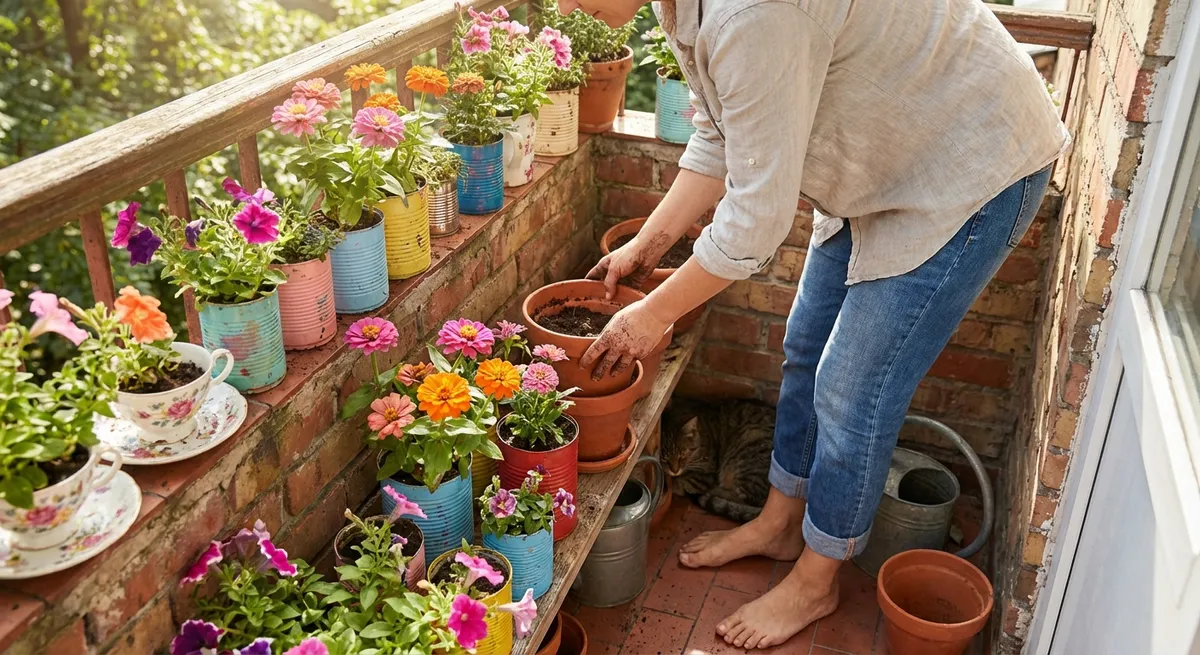
A small patch by the mailbox. The strip along your fence. That sunny corner by the patio you keep meaning to “do something” with. Flower gardening doesn’t have to start with a full-on landscape makeover or a perfect design plan—it can begin with one colorful corner. This guide walks you through choosing the right flowers, keeping them happy through the seasons, and building confidence as you go, whether you have a big backyard or a tiny balcony.
Start With Your Space, Not With the Plants
Before you fall in love with a flower at the garden center, take a few minutes to study your yard (or balcony).
Watch how the light moves:
Spend a day noticing where the sun hits for at least 15–20 minutes every couple of hours.
- Full sun: 6+ hours of direct sun (great for zinnias, sunflowers, coneflowers).
- Part sun/part shade: 3–6 hours (ideal for many salvias, daylilies, and some roses).
- Shade: Less than 3 hours of direct sun, bright but not blazing (perfect for impatiens, hostas, astilbe).
Pay attention to water and wind:
- Low spots may stay soggy after rain—better for moisture-loving plants like astilbe or Siberian iris.
- Exposed, windy areas dry quickly—choose tough, drought-tolerant plants like sedum or yarrow.
- Near walls or fences, heat can build up—good for heat lovers like lantana and verbena.
Check your soil (lightly):
- Grab a handful when it’s slightly moist.
- If it clumps and stays clumped, you likely have clay—great at holding nutrients but may need compost for better drainage.
- If it falls apart like sand, it drains fast—add compost to help it hold moisture.
- You don’t need a full soil test to start, but it’s a smart move as you expand your garden.
Once you understand your space, it’s much easier to choose flowers that will actually thrive instead of just “trying your luck.”
Pick Your Flower Mix: Annuals, Perennials, and a Few Bulbs
Think of your garden like a cast of characters—some are quick, colorful guests, others are long-term residents, and a few pop in for a spectacular seasonal appearance.
Annuals (one-season color):
These bloom their hearts out in one season, then they’re done—but they give instant gratification.
- Examples: Marigolds, petunias, zinnias, cosmos, impatiens.
- Best for: Containers, gaps in new beds, and areas you want to change every year.
- Perk: Very forgiving for beginners; you see results fast.
Perennials (come back every year):
Planted once, they return for several years, usually with a specific bloom window.
- Examples: Coneflowers (Echinacea), black-eyed Susans (Rudbeckia), daylilies, hostas, salvia, coreopsis.
- Best for: Building a low-maintenance backbone for your garden.
- Perk: Save money over time and make your flower beds feel established.
Bulbs (seasonal showstoppers):
You plant them once (usually in fall or spring), then they burst into seasonal color.
- Spring bulbs: Tulips, daffodils, crocus, hyacinths.
- Summer bulbs: Lilies, dahlias, gladiolus.
- Best for: Reliable bursts of color and early-season excitement.
- Perk: Many, like daffodils, come back and multiply with minimal effort.
A simple, beginner-friendly approach:
- Start with 2–3 easy perennials that suit your light and soil.
- Add a “ring” of annuals in front or in containers for instant color.
- Tuck in a few bulbs for a surprise show next season.
Simple Seasonal Game Plan for a Flower-Filled Year
You don’t have to be in the garden every weekend to have something blooming most of the year. Think of each season as having a small to-do list.
Spring: Wake-Up and Planting Time
- Clean up gently: Remove dead stems and leaves from last year, but leave any areas where beneficial insects might still be hiding until temperatures stay consistently warmer.
- Cut back perennials: Trim dead stems almost to the base unless your specific plant prefers another method (check the plant tag or a quick online search).
- Plant cool-season annuals: Pansies, violas, snapdragons, and calendula can handle cooler temps and give early color.
- Put in (or divide) perennials: This is a great time to plant coneflowers, hostas, and many others so they can establish before summer heat.
- Fertilize lightly: Use a balanced, slow-release fertilizer or compost for new beds and containers.
Summer: Keep the Blooms Coming
- Water deeply, not constantly: Aim for about 1 inch of water a week, adjusting for heat and rainfall. Long, deep soakings are better than frequent, shallow ones.
- Mulch your beds: A 2–3 inch layer of mulch helps keep roots cool, suppress weeds, and reduce watering needs. Keep it a bit away from plant stems.
- Deadhead (remove spent flowers):
- Pinch or snip off faded blooms on plants like zinnias, marigolds, and salvia to encourage more flowers.
- Some perennials, like catmint and coreopsis, bloom again if you shear them lightly after their first flush.
- Feed container plants: Pots dry out and leach nutrients quickly. Use a diluted, balanced liquid fertilizer every 2–4 weeks during peak growth unless your potting mix already contains slow-release food.
Fall: Gentle Wrap-Up and Future Planning
- Plant spring bulbs: Get tulips, daffodils, and crocuses into the ground before the soil freezes, typically a few weeks before your first hard frost.
- Add fall color: Mums, asters, and ornamental kale can refresh tired summer containers or fill gaps in beds.
- Cut back selectively: Remove diseased or pest-infested foliage; leave healthy seed heads from plants like coneflowers for birds and winter interest.
- Top up mulch: Add a fresh, light layer to protect roots over winter, especially in cold climates.
Winter: Rest, But With a Little Strategy
- Observe your garden’s “bones”: Notice where you might want evergreen shrubs, taller perennials, or a pop of color near walkways for next year.
- Plan your wish list: Jot down flowers you admired at neighbors’ houses or in public gardens and look for ones adapted to your zone and light conditions.
- Start seeds indoors (if you’d like): In late winter, you can start flowers like snapdragons, marigolds, or cosmos under a simple grow light or near a bright window.
Watering, Feeding, and Basic Flower Care (Without Overcomplicating It)
Flowers are a lot less fussy than many people think when you focus on a few basics.
Watering:
- Check the soil, not the clock: Stick your finger about 1–2 inches into the soil.
- If it feels dry at that depth, it’s time to water.
- If it’s still moist, wait a day or two.
- Water at the base: Wet leaves can encourage disease, especially in humid climates. Aim for the soil line.
- Morning is best: It gives plants time to dry off before evening and reduces stress in hot weather.
Feeding:
- New beds: Mixing compost into the top 6–8 inches of soil before planting often provides enough nutrients for the first season.
- Established beds: Add a thin layer of compost in spring and again in fall.
- Container flowers: Use a quality potting mix and feed with a balanced liquid or slow-release fertilizer, following label directions.
Staking and support:
- Tall flowers like dahlias, delphiniums, and some sunflowers may need support.
- Put stakes or small supports in early, before plants flop—tie gently with soft ties or garden twine.
Pest and disease basics:
- Check plants regularly: Flip leaves over to look for clusters of insects or spots.
- Start with simple fixes:
- Hose off aphids with a strong spray of water.
- Remove and discard heavily affected leaves.
- Encourage beneficial insects by avoiding broad-spectrum pesticides; many flower gardens thrive with minimal intervention when plants are well-spaced and not overwatered.
Easy Flowers for Different Kinds of Spots
You don’t need a huge variety to have good color. Start with a simple palette that matches your space.
Hot, Sunny Spots (6+ hours of sun):
- Zinnias – Bright, long-lasting blooms, great for cutting.
- Marigolds – Tough, cheerful, and good in beds or pots.
- Coneflowers (Echinacea) – Pollinator magnets and drought-tolerant once established.
- Black-eyed Susan (Rudbeckia) – Long bloom time and very forgiving.
- Sedum – Fleshy foliage and late-season flowers for bees.
Part Sun or Light Shade:
- Daylilies – Almost bulletproof, with many colors and long bloom seasons.
- Astilbe – Feathery plumes that love moist, lightly shaded spots.
- Heuchera (Coral bells) – Colorful foliage with delicate flowers; great along paths.
- Columbine – Graceful flowers in late spring; good under taller plants.
Shade and North-Facing Corners:
- Hostas – Beautiful foliage and easy care, many sizes and patterns.
- Impatiens – Bright, continuous blooms in shady beds and containers.
- Ferns – Soft, textural green backdrop for other flowers.
- Begonias – Many types handle shade well and bloom for months in pots.
Containers and Small Spaces:
- Petunias or calibrachoa – Trailing flowers that spill over edges.
- Geraniums (zonal pelargoniums) – Classic, sturdy container plants.
- Lantana – Heat-loving, long-blooming, and loved by butterflies.
- Dwarf dahlias – Big color in compact form.
Pick just 3–5 different plants to start; repeating the same plants in blocks or drifts looks more intentional and easier on the eye than many singles scattered around.
A Simple Beginner-Friendly Planting Layout
If you’re staring at a blank patch and not sure where to put anything, use this easy, flexible layout:
- Back row (tallest): 1–2 perennials or taller annuals (like coneflowers or sunflowers).
- Middle row: Medium-height perennials (like coreopsis or salvia) or mounding annuals (like marigolds).
- Front row (shortest): Low-growing annuals (like alyssum, dwarf zinnias, or lobelia) or a neat border like compact begonias.
Basic spacing tips:
- Give most flowers 8–18 inches between plants, depending on their mature size (check the tag).
- It will look a little sparse at first—resist the urge to crowd them; they’ll fill in within a few weeks to a season.
Planting steps:
- Water plants in their pots before planting.
- Dig a hole about twice as wide as the pot and just as deep.
- Gently loosen roots if they’re tightly circling.
- Set the plant so the top of the root ball is level with the surrounding soil.
- Backfill, firm the soil lightly, and water well.
- Add mulch around (not touching) the stems.
Conclusion
Flower gardening doesn’t have to be all-or-nothing or perfectly planned from day one. Start with one corner, one container, or one small bed that suits your light and soil. Mix a few reliable perennials with easy annuals, follow the simple seasonal tasks, and let your garden evolve as you learn what thrives. Over time, those small decisions add up to a yard (or balcony) that feels more colorful, welcoming, and uniquely yours—without needing a professional design or endless free time.
Sources
- University of Illinois Extension – Perennials – Clear guidance on choosing, planting, and caring for perennial flowers in home gardens
- Missouri Botanical Garden Plant Finder – Detailed profiles on thousands of flowers with light, soil, and care requirements
- Royal Horticultural Society – Watering – Practical, research-based tips on when and how to water garden plants effectively
- University of Minnesota Extension – Annual Flowers – Beginner-friendly advice on growing and maintaining annual flowers for seasonal color
- Cornell University – Flower Gardening for Beginners – Overview of planning and caring for simple home flower gardens