
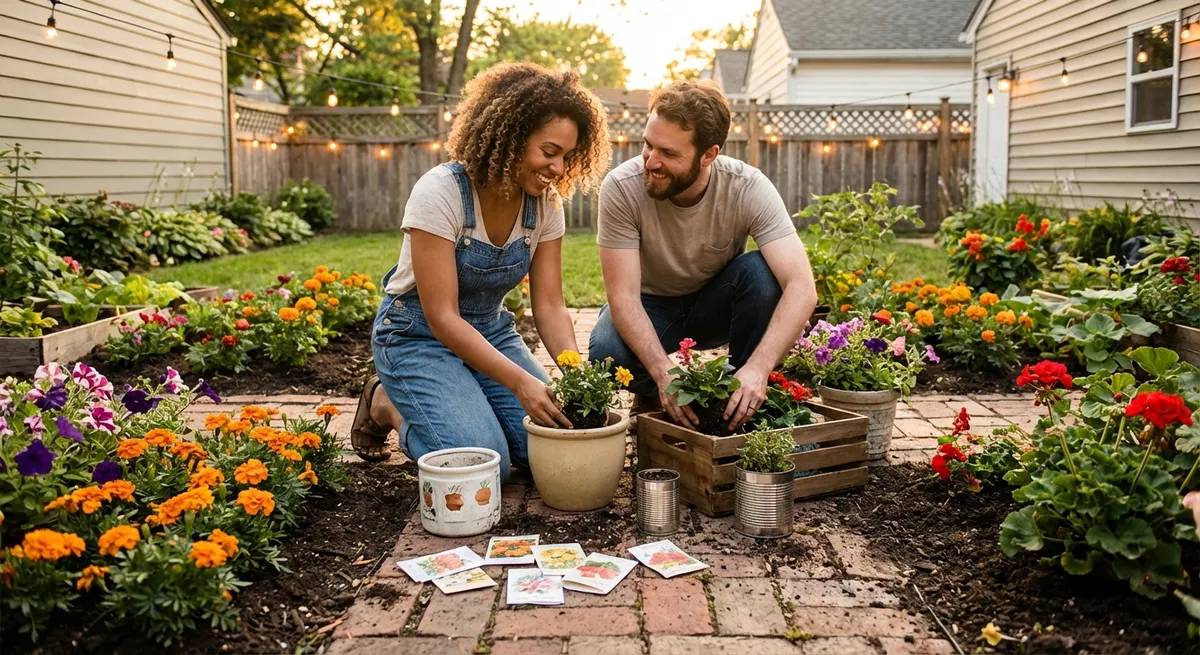
Flower gardening doesn’t have to mean endless trips to the garden center or a complicated landscape plan. With a little strategy, you can create a colorful, pollinator‑friendly yard that changes with the seasons, doesn’t drain your wallet, and fits into real life (yes, even if you’re short on time or space).
This guide walks you through practical, beginner‑friendly flower gardening: what to plant when, how to keep things alive without fuss, and easy ways to get color from early spring through frost.
Start with Your Space: Sun, Soil, and Style
Before buying a single plant, take a couple of days to “people‑watch” your yard.
Notice where the sun actually hits: is your spot in full sun (6+ hours), part sun/part shade (3–6 hours), or mostly shade (less than 3 hours)? Check at morning, midday, and late afternoon. This matters more than plant color or height; sun‑lovers in shade or shade‑lovers in full sun will always struggle.
Next, look at your soil. Scoop a handful after a rain or a good soak. Is it sandy and fast‑draining, heavy and sticky like clay, or somewhere in between? Healthy soil crumbles in your hand and doesn’t stay sopping wet for long. If you can, get a basic soil test through your local extension service or garden center to check pH and major nutrients—this helps you choose flowers that will naturally thrive.
Then think about your style and effort level. Do you like a neat, structured look with tidy borders, or a relaxed cottage‑garden feel with plants mingling together? Are you willing to water regularly and deadhead (remove spent blooms), or do you need near‑zero maintenance? Being honest about this now will save you money and frustration later.
Finally, measure your main planting area and sketch a simple layout. Include existing features like trees, walkways, or fences, and note sunny vs. shady zones. This little map becomes your cheat sheet when picking plants.
Seasonal Color Strategy: Plan Once, Enjoy All Year
A great flower garden feels alive from early spring to the first frost, even if you’re only planting a few things. Think of your yard like a relay race: different plants “run” at different times, handing off color to the next group.
A practical way to plan:
- Early spring anchors: Bulbs like daffodils, tulips, crocus, and hyacinths, plus early perennials such as columbine, lungwort, and hellebores, can bring color while the rest of the yard still looks sleepy. Most bulbs are planted in fall, then pop up on their own each year.
- Late spring to early summer stars: Think peonies, irises, foxglove, allium, and salvia. These bridge the gap between spring bulbs and summer flowers. Add a few shrubs like spirea or weigela if you have space—they bloom reliably and require little care.
- Summer powerhouses: This is where you get long-lasting impact. Annuals like zinnias, marigolds, cosmos, and petunias bloom nonstop with regular deadheading. Perennials like coneflower (Echinacea), black‑eyed Susan (Rudbeckia), and daylilies join in, attracting bees and butterflies.
- Late summer to fall finishers: Mums, asters, sedum ‘Autumn Joy,’ and ornamental grasses carry your garden into cooler weather. In warmer regions, some salvias and lantanas flower right up to frost.
When shopping, read plant tags for bloom time, height, and sun requirements. Aim for at least one main bloomer for each part of the season in your key beds. Group plants that bloom at the same time so you get clusters of color instead of scattered dots.
Choosing Reliable, Beginner‑Friendly Flowers
If you’re just starting out, pick sturdy, forgiving plants that bounce back from minor mistakes. Look for disease‑resistant varieties and plants labeled as “easy to grow” or “great for beginners.”
Some dependable perennials for most sunny yards include:
- Coneflower (Echinacea) – Drought‑tolerant once established, loved by pollinators, and offers winter interest with seed‑filled centers.
- Black‑eyed Susan (Rudbeckia) – Long bloom time, bright yellow flowers, and minimal fuss.
- Daylilies (Hemerocallis) – Many colors and sizes, tolerant of less‑than‑perfect soil, and very forgiving.
- Catmint (Nepeta) – Long‑blooming, fragrant, and highly attractive to bees, while often ignored by deer.
- Shasta daisy (Leucanthemum) – Classic daisy look with cheerful white petals and yellow centers.
For partial shade, try:
- Astilbe – Feathery blooms and pretty foliage, great near water or moist beds.
- Bleeding heart (Dicentra) – Graceful heart‑shaped flowers in spring.
- Hosta – Grown primarily for foliage; flowers are a bonus and attract hummingbirds.
And for colorful, low‑cost annuals that bloom their hearts out in full sun:
- Zinnias – Great for cut flowers; sow seeds directly in the garden.
- Marigolds – Tough, bright, and helpful in veggie gardens too.
- Cosmos – Airy, tall, and excellent for filling gaps.
- Petunias or calibrachoa – Perfect for containers and hanging baskets.
Choose a small mix instead of dozens of different plants. Repetition looks intentional and is easier to care for.
Smart Soil Prep and Watering (Without Overcomplicating It)
Healthy soil is the quiet hero of any flower garden. You don’t need to become a soil scientist, but a few basic steps make a big difference.
- Improve with compost: Before planting, spread 1–2 inches of compost or well‑rotted organic matter over your beds and gently work it into the top 6–8 inches of soil. This improves drainage in clay, adds moisture‑holding capacity to sandy soil, and feeds beneficial soil life.
- Mulch wisely: After planting, add a 2–3 inch layer of organic mulch (shredded leaves, bark, or straw) around plants, keeping it a couple of inches away from stems. Mulch reduces weeds, conserves water, and moderates soil temperature.
- Water deeply, not constantly: Instead of light daily sprinkling, water thoroughly but less often. Aim for about 1 inch of water per week (from rain and irrigation combined) for most flowers. Deep watering encourages roots to grow down, making plants more resilient.
- Morning is best: Water early in the day so foliage can dry quickly. Consistently wet leaves in the evening can encourage fungal diseases.
If you’re likely to forget watering, consider a simple soaker hose snaked through your beds, connected to a timer. It delivers water right at soil level and saves both time and water.
Easy Care Routines by Season
A little seasonal maintenance goes a long way toward keeping your flower garden healthy and blooming.
Spring
- Clear away winter debris, but leave some seed heads and stems until nights are consistently above freezing to protect beneficial insects that overwinter there.
- Cut back dead stems on perennials as new growth appears.
- Divide and replant crowded perennials like daylilies or hostas.
- Add fresh compost around plants and top up mulch where needed.
Summer
- Check soil moisture every few days, especially during heat waves.
- Deadhead spent flowers on annuals and many perennials to encourage more blooms.
- Keep an eye out for common issues like powdery mildew on susceptible plants; improve air circulation by thinning dense growth.
- Stake taller flowers (like delphiniums or some daisies) before they flop.
Fall
- Enjoy late‑season blooms and leave some seed heads (like coneflowers) for birds.
- Cut back only diseased or badly damaged foliage; otherwise, consider leaving some plants standing over winter for wildlife habitat and visual interest.
- Plant spring‑flowering bulbs once soil cools.
- In colder climates, add a layer of mulch around tender perennials once the ground has begun to freeze to protect roots.
Winter
- Plan next year’s garden: what worked, what didn’t, and where you want more color.
- Order seeds and bulbs early for the best selection.
- If you’re in a milder climate, winter may be prime time to plant certain perennials and shrubs while the soil is cool and moist.
Container Flower Gardens for Small Spaces
No yard? No problem. Containers can be just as lush and colorful as in‑ground beds, and they’re easier to rearrange.
Start with pots that have drainage holes and are large enough for your plants’ mature size. Bigger containers hold moisture longer and are more forgiving if you miss a watering. Use high‑quality potting mix, not garden soil, which compacts in containers.
A simple formula for eye‑catching pots is “thriller, filler, spiller”:
- Thriller: A taller focal plant (like a dwarf grass, upright salvia, or geranium).
- Filler: Mounding plants (like petunias, begonias, or marigolds).
- Spiller: Trailing plants that drape over the edge (like sweet potato vine, creeping Jenny, or lobelia).
Group containers by water and light needs. Place thirsty shade‑lovers together and sun‑loving drought‑tolerant plants in another cluster. Containers usually need watering more often than in‑ground beds, especially in hot weather, so check daily in summer.
Fertilize lightly with a balanced slow‑release fertilizer at planting, then supplement with a diluted liquid fertilizer every few weeks if plants start to look tired.
Welcoming Pollinators and Wildlife (While Staying Tidy)
Flower gardens are not just for us—bees, butterflies, and birds rely on them too. You can create a wildlife‑friendly space that still looks neat and intentional.
- Choose nectar‑rich, single‑flower forms (where you can see the central pollen area) instead of highly doubled blooms, which can be harder for pollinators to access.
- Plant in clusters or drifts. Bees and butterflies prefer patches of the same flower type they can visit efficiently.
- Include native plants when possible. Many local bees and butterflies have evolved alongside specific native flowers.
- Limit or avoid pesticides, especially broad‑spectrum insecticides. If you must treat a serious problem, target it carefully and spray in the evening when pollinators are less active.
To keep things tidy, edge your beds with a clear border (brick, stone, or a clean spade‑cut line) and group taller, wilder‑looking plants toward the back, with more structured plants near paths and patios.
Simple Flower Garden Layout Ideas to Try
If you’re unsure how to arrange plants, start with one of these easy layouts and adapt it to your space.
- Front door welcome bed: A small bed near your entry with spring bulbs, a summer‑flowering shrub (like hydrangea or spirea), and seasonal annuals for quick pops of color.
- Sunny border along a fence: Tall perennials like coneflower, black‑eyed Susan, and ornamental grasses at the back; medium plants like shasta daisies and catmint in the middle; low growers like creeping thyme or alyssum at the front.
- Pollinator patch: A 4' x 4' bed or raised planter filled with bee and butterfly favorites: lavender, salvia, zinnias, cosmos, and a few native wildflowers suited to your region.
- Shade nook: Under trees or along a north wall, mix hostas, ferns, astilbe, and impatiens or begonias for season‑long texture and soft color.
Start small—one or two focused areas—and expand once you know what you like and what thrives in your yard.
Conclusion
Flower gardening doesn’t require a perfect yard, fancy tools, or hours of daily care. When you match plants to your sunlight and soil, layer bloom times through the seasons, and keep up with a simple care routine, your yard will reward you with ongoing color and life.
Begin with a modest plan, a handful of reliable plants, and a willingness to experiment. Over time, your flower garden will become uniquely yours—a space that reflects your style, supports local wildlife, and gives you a reason to step outside and enjoy your yard in every season.
Sources
- [University of Minnesota Extension – Flower Garden Basics](https://extension.umn.edu/flowers) - Covers site selection, soil preparation, and general flower care for home gardens
- [University of Illinois Extension – Perennials](https://web.extension.illinois.edu/perennials) - Detailed guidance on choosing, planting, and maintaining perennial flowers
- [Royal Horticultural Society – Gardening with Wildlife](https://www.rhs.org.uk/wildlife) - Practical advice on creating pollinator- and wildlife-friendly flower gardens
- [Missouri Botanical Garden – Plant Finder](https://www.missouribotanicalgarden.org/plantfinder/plantfindersearch.aspx) - Reliable plant database for checking bloom time, growing conditions, and mature size
- [USDA – Plants Database](https://plants.sc.egov.usda.gov/home) - Official information on native and introduced plants across different U.S. regions