
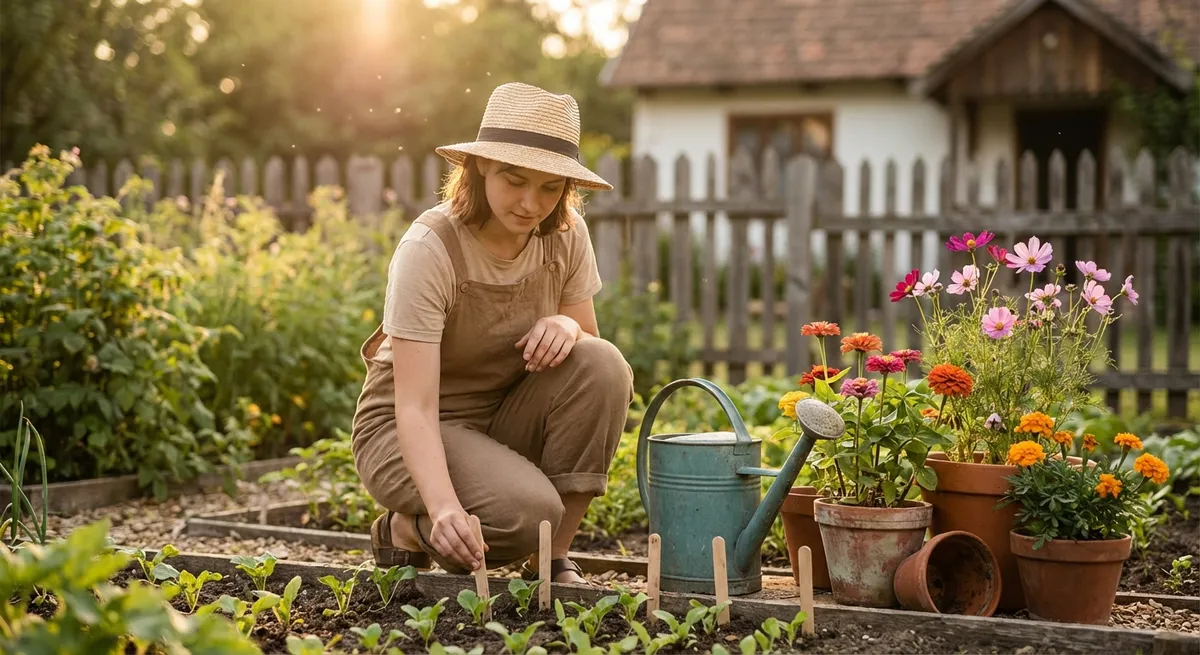
Flower gardening doesn’t have to be intimidating or expensive. With a bit of planning and a few simple habits, you can turn any yard—big or small—into a colorful, pollinator-friendly oasis. This guide will walk you through the basics: choosing plants, caring for them through the seasons, and avoiding common beginner mistakes, all with practical, easy-to-follow tips you can start using right away.
Start Smart: Choosing the Right Flowers for Your Yard
Before you fall in love with a plant at the garden center, it’s worth doing a little detective work on your yard.
First, learn your USDA hardiness zone so you know which plants can survive your winters. Then, observe your yard for a few days: which spots get full sun (6+ hours), partial sun (3–6 hours), or shade (less than 3 hours)? Group sun-loving flowers like coneflowers, zinnias, and roses where they’ll get plenty of light, and use shade-tolerant plants like astilbe, hostas, and impatiens in dimmer corners.
Pay attention to your soil type too. Is it sandy and fast-draining, sticky clay, or somewhere in between? Most flowering plants prefer well-drained soil rich in organic matter. If water pools for a long time after rain, you may need to add compost, leaf mold, or raised beds to improve drainage. When in doubt, choose “easy-care” plants labeled as drought-tolerant or “great for beginners,” like marigolds, black-eyed Susans, cosmos, or daylilies.
Finally, mix annuals (which bloom their hearts out for one season) with perennials (which come back year after year). Annuals give instant color and fill gaps, while perennials are your long-term framework.
Seasonal Flower Gardening Blueprint: Spring to Winter
A beautiful garden isn’t just about one showy month; it’s about steady interest through the seasons. Think of your garden as a year-round project, with each season playing a different role.
Spring (Wake-Up Season)
Focus on clean-up and planting cool-friendly flowers. Remove dead stems, rake stray leaves, and add a 1–2 inch layer of compost around plants. Plant hardy annuals like pansies, snapdragons, and calendula as soil becomes workable. This is also prime time to plant many perennials and spring-flowering bulbs (in colder climates, some bulbs are planted in fall for spring bloom, like tulips and daffodils).
Summer (Showtime)
This is peak bloom season. Keep flowers happy by watering deeply (but not constantly), deadheading spent blooms, and adding a light mulch to keep roots cool and moist. Warm-season annuals such as zinnias, sunflowers, petunias, and dahlias really take off now. This is the time to enjoy the garden, but also to watch which plants thrive and which struggle, so you can adjust next year’s plan.
Fall (Refresh & Plant Ahead)
Fall is ideal for planting many perennials and shrubs because the soil is warm, but the air is cooler and rainfall is often more regular. Add fall-blooming flowers like asters, mums, sedum, and goldenrod for late-season color and pollinator support. Clean up diseased foliage, but consider leaving some seed heads (like coneflowers and ornamental grasses) to feed birds and add winter interest.
Winter (Plan & Protect)
Most of the action moves below ground. Protect tender perennials and new plantings with a layer of mulch once the ground is cold. Use this quieter season to sketch next year’s flower bed layout, research plants, and note what worked and what didn’t. A bit of planning now makes spring feel much less overwhelming.
Watering, Feeding, and Mulching: Simple Care That Actually Works
Many flower problems come down to three basics: water, nutrients, and soil temperature. If you get these right, your plants can handle a lot on their own.
Watering:
Aim for deep, infrequent watering instead of daily sprinkles. Most established flowers do well with about 1 inch of water per week (including rain). Water at the base of plants in the early morning so leaves dry quickly, which reduces disease. Containers may need water more often, especially in summer—check daily by sticking your finger into the soil; if it’s dry an inch down, it’s time to water.
Feeding:
If your soil is enriched with compost, you often don’t need heavy fertilizer. For blooming plants, a balanced, slow-release fertilizer or an organic flower fertilizer applied according to label directions is usually enough. Avoid over-fertilizing—too much nitrogen can produce lush leaves but few flowers. Container plants, which lose nutrients more quickly, benefit from a diluted liquid feed every 2–4 weeks in the growing season.
Mulching:
Mulch is like a protective blanket for your garden. A 2–3 inch layer of shredded bark, leaves, or compost helps keep soil moisture even, suppresses weeds, and moderates soil temperature. Keep mulch a couple of inches away from stems to avoid rot. Over time, organic mulches also improve soil structure and fertility.
Easy Flower Favorites for New Gardeners
You don’t need rare or tricky plants to have a stunning garden. These easy growers are forgiving, colorful, and great confidence-builders:
- Marigolds: Bright, long-blooming, and very forgiving. Great for borders and containers.
- Zinnias: Fast-growing from seed, with bold colors that attract butterflies. Love full sun.
- Black-Eyed Susans (Rudbeckia): Hardy perennials with cheerful yellow blooms; great for naturalizing.
- Coneflowers (Echinacea): Tough perennials that handle heat and drought, and feed pollinators and birds.
- Petunias: Ideal for hanging baskets and containers; nonstop bloomers with lots of color choices.
- Hostas and Astilbe: Perfect for shady spots, adding both texture and flowers.
- Cosmos: Light, airy plants that bloom abundantly and reseed themselves in many gardens.
Start with a small selection—maybe three to five types—so you can learn how each behaves through a full season. It’s easier to expand a healthy, simple garden than to fix an overcrowded, chaotic one.
Designing Flower Beds That Look Good All Season
You don’t have to be a landscape designer to create a bed that looks intentional. A few simple guidelines can make a big difference.
- Think in layers: Place tall plants (like sunflowers, hollyhocks, or tall phlox) in the back, medium-height plants (like coneflowers, salvias, and daisies) in the middle, and low growers (alyssum, creeping phlox, lobelia) along the front edge.
- Plant in groups, not singles: Clumps of 3, 5, or 7 of the same plant create more impact than a lone flower here and there. Repeating the same plants in several spots ties the whole bed together.
- Stagger bloom times: Combine early-, mid-, and late-season bloomers so there is always something in flower. For example, pair spring bulbs and pansies with summer coneflowers and fall asters.
- Use foliage as a design tool: Flowers fade, but leaves are always there. Mix different leaf sizes and colors—like silvery lamb’s ear, dark-leaved heucheras, and grassy textures—to keep the garden interesting even between flushes of bloom.
- Leave room to grow: Check the mature size on plant tags and give each plant the space it needs. Overcrowding leads to disease, poor air circulation, and extra work later.
Sketching your bed on paper first can help you visualize shapes and color combinations before you start digging.
Dealing With Pests and Problems the Gentle Way
Every garden gets pests or disease at some point. The goal isn’t a “perfect” garden, but a balanced one where plants are healthy enough to bounce back.
- Start with healthy plants: Buy from reputable nurseries and avoid plants that look wilted, spotted, or insect-ridden.
- Right plant, right place: Stressed plants (too much shade, not enough water, poor soil) attract more pests and disease. Fixing the environment usually helps more than spraying.
- Encourage beneficial insects: Ladybugs, lacewings, and predatory wasps eat many common pests. Plant nectar-rich flowers (like dill, yarrow, and daisies) and avoid broad-spectrum pesticides that kill the “good guys.”
- Hand-pick and prune: For many issues—like a few aphids, Japanese beetles, or diseased leaves—simple hand removal and disposal is all you need.
- Use targeted controls only when needed: If a problem gets out of hand, look for the least-toxic solution, such as insecticidal soaps or horticultural oils, and always follow label directions carefully.
Learning to identify a handful of common issues in your area (like powdery mildew, slugs, or Japanese beetles) will make you more confident and quicker to respond.
Container Flower Gardening: Big Color in Small Spaces
If you don’t have much yard—or any yard at all—you can still grow a stunning flower garden in containers.
Choose pots with drainage holes and fill them with high-quality potting mix (not garden soil, which compacts too much in pots). Mix plants using the classic “thriller, filler, spiller” approach: one tall, eye-catching plant (thriller), medium plants to fill space (filler), and trailing plants to spill over the edge (spiller). For example: a tall geranium (thriller), petunias (fillers), and sweet potato vine or trailing lobelia (spillers).
Container plants dry out faster than in-ground plants, so check moisture daily in hot weather. Feed regularly with a diluted liquid fertilizer during the growing season since nutrients leach out with frequent watering. Rotate containers occasionally so all sides get sun and grow evenly.
Containers are perfect for experimenting with color schemes and plant combinations—if something doesn’t work, you can easily change it next season (or even mid-season).
Conclusion
Flower gardening is a journey, not a single weekend project. Start small, choose forgiving plants, and focus on the basics: the right plant in the right place, consistent watering, healthy soil, and simple seasonal care. Over time, you’ll learn your yard’s personality—where the wind hits hardest, which corner stays cool and damp, which bed bakes in the afternoon sun—and your garden will get better every year.
Most importantly, make time to enjoy what you’ve created. Sit among your blooms, watch the bees and butterflies, and let your flower garden be as much a place of rest as it is a project. With a little attention and a bit of curiosity, you’ll have a yard you’re proud to share—and that keeps rewarding you season after season.
Sources
- USDA Plant Hardiness Zone Map - Official USDA tool for finding your hardiness zone and choosing climate-appropriate plants
- University of Minnesota Extension – Gardening - Research-based advice on flower selection, planting, and care
- Royal Horticultural Society – Flower Garden Advice - Practical guides on growing, watering, feeding, and designing with flowers
- Missouri Botanical Garden – Plant Finder - Detailed plant profiles including light, soil, and care requirements
- Penn State Extension – Home Garden Flower Care - Information on annuals, perennials, and common garden problems