
A good lawn doesn’t have to look like a golf course to be worth loving. Whether your yard is patchy, lumpy, weedy, or just “meh,” you can make it greener, softer, and easier to live with using some simple, realistic habits. This guide walks you through what to do in each season, how to water and mow without guesswork, and how to handle common problems—without turning lawn care into a second job.
Knowing Your Lawn: Sun, Soil, and Expectations
Before you pull a single weed or buy a bag of seed, it helps to know what you’re working with and what you actually want.
Start by watching your yard over a full day. Notice where the sun hits longest, where shade lingers, and where water tends to puddle or run off. These patterns will tell you which grasses and groundcovers will thrive instead of struggle. Full-sun areas can handle many traditional turfgrasses, while deep shade might be better for shade-tolerant grasses, groundcovers, or even mulch and seating areas.
Next, feel your soil. Scoop some up when it’s slightly moist. If it stays in a tight ball, you likely have clay; if it crumbles instantly, you may have sandy soil. Clay holds nutrients but drains poorly; sand drains fast but doesn’t hold water well. This affects how often and how long you water, and whether you should add compost to improve texture.
Just as important: decide what “success” looks like for you. Is it a soft play area for kids and pets, a neat green backdrop for flowers, or simply fewer brown patches? Being honest about your goals helps you focus on what matters most and skip the perfectionism that makes lawn care feel overwhelming.
Mowing Made Simple: Height, Frequency, and Healthy Habits
Mowing isn’t just a chore; done right, it’s one of the easiest ways to grow a stronger lawn with fewer weeds.
Aim to mow so that you’re only cutting off about one-third of the grass blade at a time. For most cool-season lawns (like Kentucky bluegrass or fescue), that means keeping the grass about 3–4 inches tall; for many warm-season grasses (like Bermuda or zoysia), slightly shorter heights may be appropriate. Taller grass shades the soil, locks in moisture, and makes it harder for weed seeds to sprout.
Keep mower blades sharp. Dull blades tear grass instead of cutting it cleanly, leaving ragged tips that dry out and turn brown. If you see lots of white or tan frayed edges after mowing, it’s time to sharpen or replace the blade. Most homeowners can sharpen blades once or twice a season and see a big difference.
Whenever possible, mow when the grass is dry. Wet grass can clump, clog your mower, and lead to uneven cuts. Changing your mowing direction from time to time (north-south one week, east-west the next) can also keep the lawn from leaning and developing ruts.
Finally, consider leaving grass clippings on the lawn instead of bagging them. Clippings break down and return nutrients—especially nitrogen—back into the soil. As long as you’re not letting the grass get extremely tall between cuts, “grasscycling” is an easy, free fertilizer boost.
Watering Without Wasting: How Much, How Often, and When
Most lawns suffer more from inconsistent or shallow watering than from drought itself. The goal is deep roots that can reach water stored lower in the soil, not frequent sips at the surface.
As a general guideline, most established lawns do well with about 1–1.5 inches of water per week from rain and irrigation combined. Instead of watering a little every day, water deeply 1–2 times per week. This encourages roots to grow down rather than staying near the surface, making your lawn more resilient to heat and dry spells.
You can test how long to run your sprinkler by placing a few empty tuna cans or shallow containers around the yard. Run your system or sprinkler and see how long it takes to collect about half an inch of water. Use that as a reference for your weekly schedule, adjusting for rain and heat.
Water in the early morning, ideally between 4 a.m. and 10 a.m. This reduces evaporation and gives the grass blades time to dry during the day, which helps prevent diseases. Evening watering leaves grass wet overnight, creating a better environment for fungal problems.
Watch your lawn for “thirsty” signals. Footprints that remain visible, grass that looks dull or bluish-gray, or blades that don’t bounce back after walking on them are signs your lawn needs a deep drink. Adjust during heatwaves—more frequent, slightly shorter deep waterings may be necessary, but still avoid a quick daily sprinkle whenever you can.
Seasonal Lawn Game Plan: Spring Through Winter
Thinking in seasons makes lawn care more manageable. Instead of trying to do everything at once, you can spread tasks through the year.
Spring: Wake-Up and Repair
In early spring, start by gently raking away leaves, twigs, and winter debris. This helps prevent mold and gives new growth some breathing room. Once the grass starts actively growing, you can:
- Patch thin or bare areas with seed appropriate for your region and sun conditions.
- Lightly loosen compacted spots with a garden fork or aeration tool if the soil feels hard.
- Apply a balanced, slow-release fertilizer if your soil tests indicate it’s needed (a soil test is more accurate than guessing).
Avoid heavy foot traffic while the ground is very soft and soggy; this can cause compaction and ruts that are harder to fix later.
Summer: Protect and Maintain
Summer is about helping your lawn survive heat and stress, not pushing heavy growth.
- Raise your mower height slightly to shade the soil and protect roots.
- Stay consistent with deep, infrequent watering during dry spells.
- Spot-treat weeds instead of trying to blanket-treat everything.
- Avoid heavy fertilizing during very hot, dry periods, which can burn grass.
Be patient if your cool-season grass goes slightly dormant and tan during extreme heat. With proper watering and care, it can often bounce back when temperatures drop.
Fall: Repair and Strengthen
For many cool-season lawns, fall is the best time for big improvements.
- Aerate compacted areas to let air, water, and nutrients reach roots.
- Overseed thin lawns, especially after aeration, so seed makes good soil contact.
- Apply a fall fertilizer if your soil test recommends it—this strengthens roots heading into winter.
- Continue mowing until the grass stops growing, gradually lowering the height a bit to prevent matting under snow in snowy climates.
Fall is also a good time to tidy borders, edge walkways, and shape beds so everything looks neat through winter.
Winter: Rest and Plan
In winter, the main job is to protect what you’ve built.
- Avoid parking heavy vehicles or storing materials on the lawn, which causes compaction and bare spots.
- Try not to shovel or plow snow piles repeatedly over the same patch of grass.
- Take note of problem areas you noticed all year—shade issues, drainage problems, or traffic patterns—and start planning changes for spring.
This is also a good time to service your mower, sharpen blades, and organize tools so you’re ready when the first warm days arrive.
Simple, Beginner-Friendly Lawn Fixes for Common Problems
Every lawn has “trouble spots.” The good news is that most can be improved with small, repeatable habits instead of drastic measures.
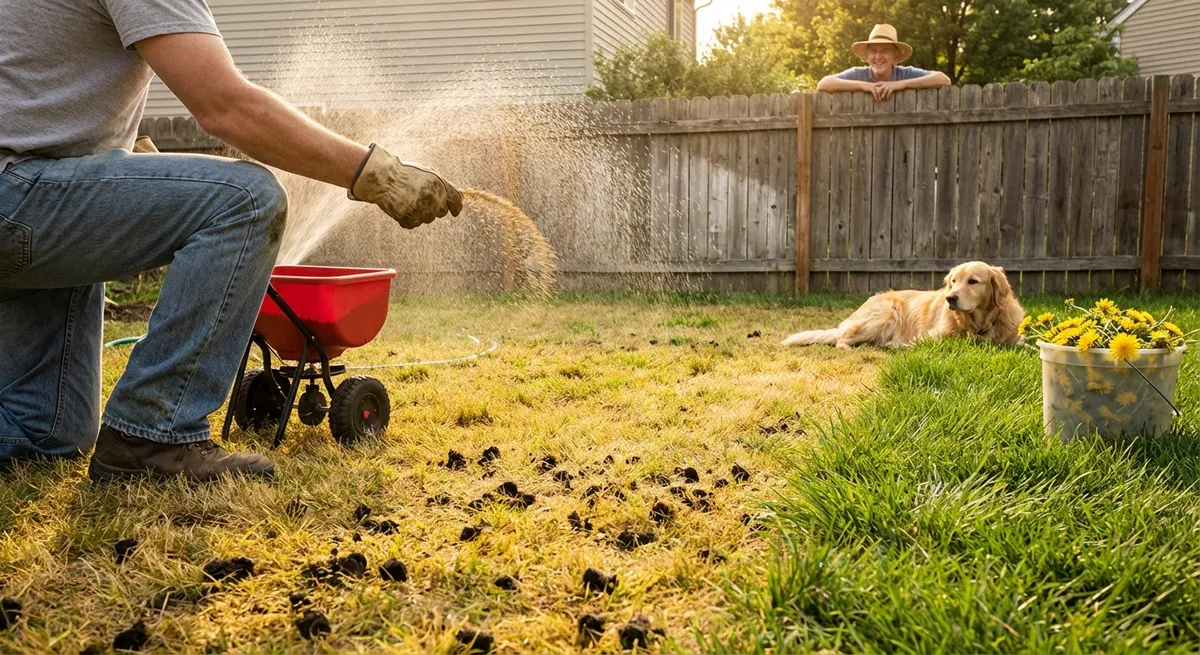
For bare or thin patches, loosen the top inch of soil with a rake, mix in a bit of compost if you have it, sprinkle grass seed suited to your light conditions, and gently press it in so it makes good contact. Keep it consistently moist (not soaked) until seedlings are established. A light covering of straw or a seed germination blanket can help protect new seed from birds and drying out.
Weeds often signal deeper issues like compacted soil, low mowing heights, or inconsistent watering. Rather than chasing every weed with chemicals, focus on building a dense, healthy lawn. Mow a bit higher, water properly, and overseed thin areas. Over time, thick grass crowds out many weeds naturally. For stubborn invaders, hand-pull when the soil is moist or use targeted spot treatments according to label directions.
Yellow spots, especially where pets frequent, can result from concentrated nitrogen in urine. Encourage pets to use a designated mulched area if possible or rinse those spots with water soon afterward. You can later rake lightly, reseed, and keep the area moist until it greens up.
If parts of your lawn stay soggy after rain, or always struggle no matter what you do, consider whether grass is the right choice for that area. Sometimes the easiest “fix” is to convert problem zones to mulched planting beds, rain gardens, or pathways. Working with your yard’s natural tendencies often leads to less maintenance and a better-looking space overall.
Growing a Lawn You Actually Enjoy
A great lawn isn’t about perfection—it’s about how it feels under bare feet, how well it handles your family’s everyday life, and how much (or how little) work it takes to keep it going. By mowing a bit smarter, watering more deeply, tackling a few simple seasonal tasks, and choosing realistic goals, you can turn a patchy, frustrating yard into a lawn that makes your outdoor time more relaxing.
Start with one or two changes—maybe raising your mower height and switching to deep, once- or twice-a-week watering. Notice how your lawn responds over a month or two, then build from there. Lawn care becomes much less intimidating when you treat it as a series of small improvements instead of a giant project you have to “finish.”
Your yard doesn’t have to be perfect to be worth enjoying. With a little consistency and a few smart habits, it can absolutely be greener, thicker, and friendlier to live in—one weekend at a time.
Sources
- [University of California Statewide Integrated Pest Management Program – Lawn Management](https://ipm.ucanr.edu/home-and-landscape/turfgrass-management/) - Research-based guidance on mowing, watering, fertilizing, and solving common lawn problems
- [Cornell University Turfgrass Program](https://turf.cals.cornell.edu/home-lawn/) - Practical lawn care information for homeowners, including seasonal tips and maintenance basics
- [University of Minnesota Extension – Lawn Care](https://extension.umn.edu/lawn-care) - Detailed advice on watering, mowing heights, overseeding, and lawn repair strategies
- [United States Environmental Protection Agency – Watering Tips](https://www.epa.gov/watersense/outdoor-water-use) - Recommendations for efficient outdoor watering and reducing waste
- [Clemson Cooperative Extension – Mowing Lawns Correctly](https://hgic.clemson.edu/factsheet/mowing-lawns-correctly/) - Explains how mowing height and frequency affect lawn health and weed pressure